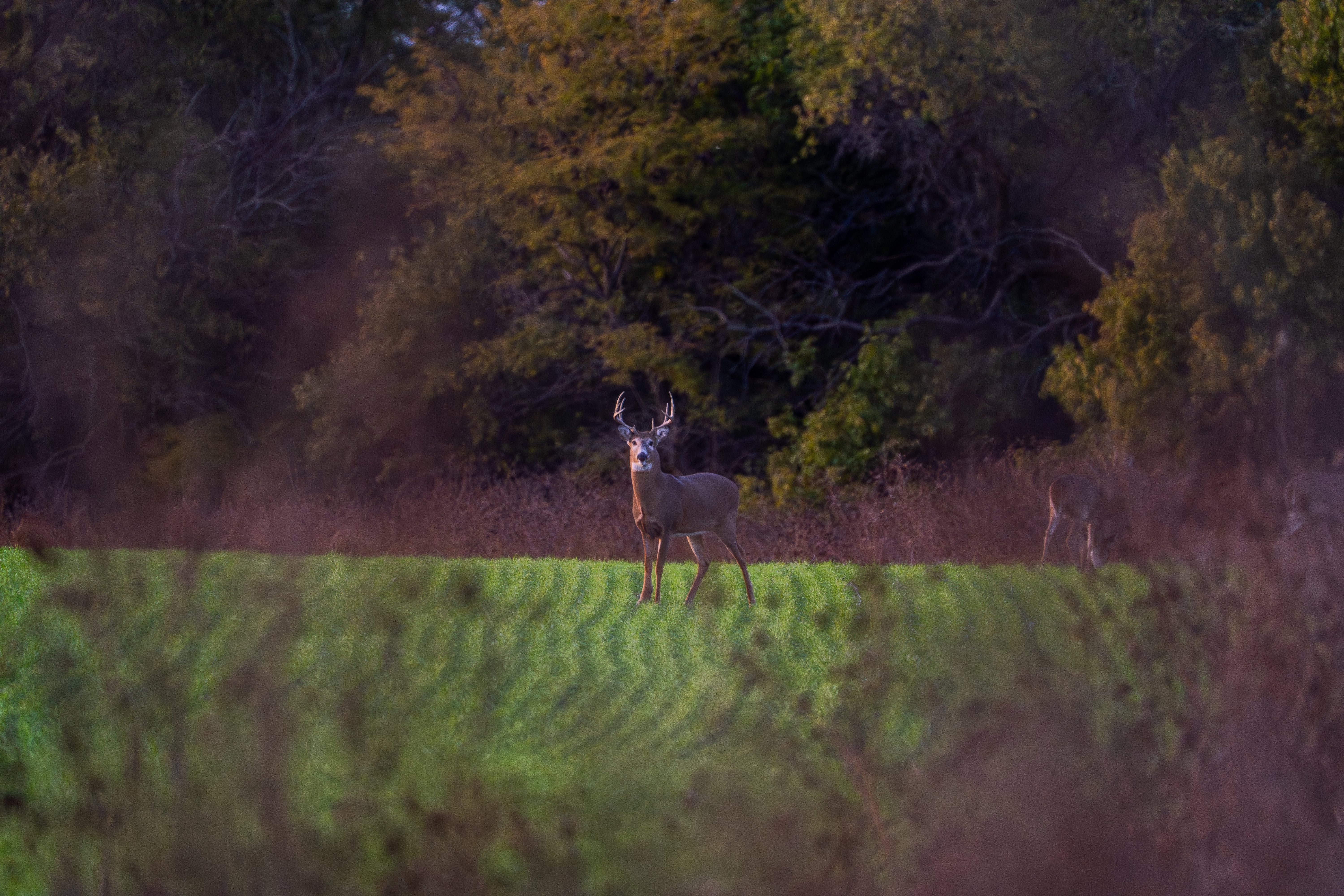
Unfortunately, time is now running out on many gun, muzzleloader and archery seasons. And with many states locked in winter conditions not exactly conducive to great daylight movement, it’s time to consider some extreme strategies that just might give diehard hunters an edge. Here are a few, designed to get deer up on their feet — and give you a shot at late-season success.
DRIVE SMALL POCKETS
Big bucks tend to survive because they hole up in pockets of dense cover that most hunters overlook. So now’s the time to consider such pockets of isolated cover, maybe the kind where farm-country upland hunters might expect to flush a ringneck or two. However many drivers and posters you are able to get involved, be sure to station at least one hunter behind the drivers — to ambush a cagey buck that lays low and tries to escape out the back.
BRING A FRIEND
Still-hunting alone in fresh-snow conditions, on the track of a big-woods buck, is one of the most classic whitetail hunts. But a still-hunt with a friend during the late season might be more productive. Both should hunt into the wind or with a cross wind, either parallel to each other, or with one about 50 yards back and to the side. The goal should be to keep in visual contact.
Another smart tactic, carefully planned with the help of an aerial or topo map, involves two hunters leap-frogging each other through areas of suspected bedding cover. The first hunter works up ahead until he’s almost out of sight, then the partner pushes forward, off to the side. The idea is for the hunters to take turns watching for fleeing deer and picking their way carefully through the thick cover.
MUSICAL CHAIRS
I’ve detailed this technique previously — (see ‘An Outside-The-Box Late-Season Deer Drive’) — but it bears repeating here. My old writer friend Jeff Murray told me about this drive that requires two to six hunters and a stretch of hunting land that all know intimately. The basic premise is that all hunters begin their morning in treestands set up in a large circular pattern, and then take turns climbing down and moving to the next stand over, in a clockwise pattern…just like the childhood game. Hunters take turns climbing down and making a move to the next stand — so no more than one hunter is moving at a time.
.png)