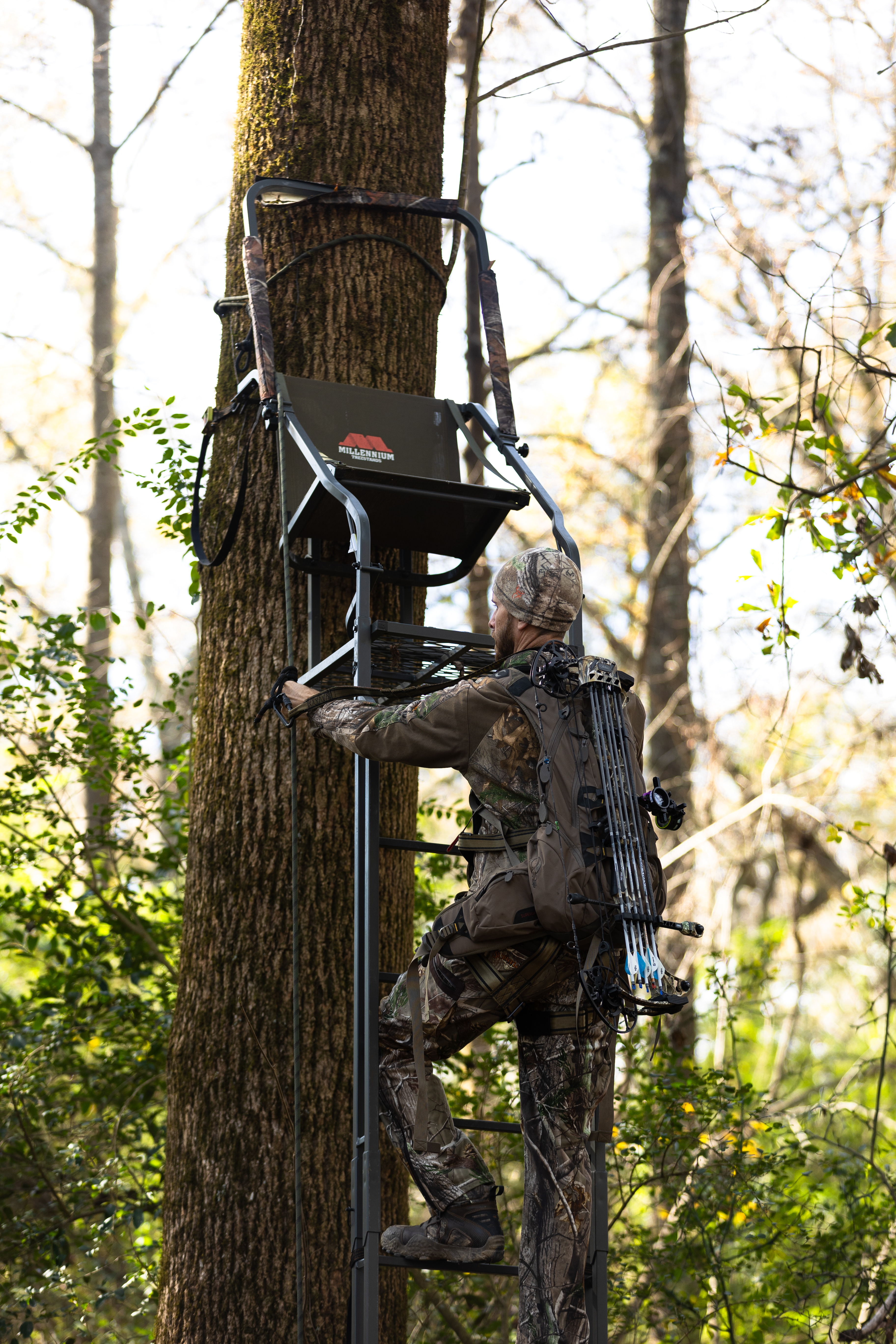
You know that one stand you've been waiting all year to hunt? The one overlooking a perfect food plot, a well-traveled trail or a bedding area where you've captured countless trail camera photos of a giant buck? As tempting as it is to climb into that stand every chance you get, doing so could be the very reason your target buck disappears.
When it comes to hunting mature whitetails, sometimes the smartest move is knowing when not to hunt.
Don't Let Your Favorite Stand Become Predictable
Mature bucks don't reach their age by being careless. They're remarkably good at detecting changes in their environment, including repeated human activity.
Every trip to your stand introduces the possibility of leaving behind scent, making noise or bumping deer along your entry and exit routes. Over time, that pressure can cause mature bucks to shift their movement patterns, become increasingly nocturnal or avoid the area altogether.
Let the Wind Make the Decision
One of the biggest mistakes hunters make is hunting a productive stand when the wind isn't in their favor. Just because the deer are showing up doesn't mean you should.
Before heading out, consider where deer are likely to approach from and where your scent will travel. Pay attention to shifting winds and thermals, especially during morning and evening temperature changes.
If the wind isn't right, save that stand for another day. A little patience now could mean a much bigger opportunity later.
Your Entry and Exit Matter Just as Much
Even with the perfect wind while you're sitting in your stand, your approach could be ruining your chances.
Walking through feeding areas, crossing heavily traveled trails or bumping deer on your way out can quickly educate the very buck you're hoping to encounter.
Whenever possible, plan access routes that keep you concealed and away from areas where deer are likely to be moving. Sometimes taking the longer way around is worth every extra step.
Give Your Best Spots a Break
It's easy to assume that spending more time in the woods automatically increases your chances of success. But when you're targeting a mature buck, quality sits often matter more than quantity.
Consider rotating between stand locations and saving your highest-confidence setups for ideal conditions, such as a favorable wind or a well-timed cold front.
And remember, just because a buck isn't appearing on your trail camera doesn't necessarily mean he's gone. He may simply have adjusted his routine.
The Bottom Line
The best deer hunters aren't always the ones who spend the most hours in their favorite stand. They're the ones who know when conditions are right to make their move.
This October, don't let excitement get the best of you. Hunt smarter, minimize pressure and remember that sometimes the most productive thing you can do for your favorite stand is leave it alone.
.png)